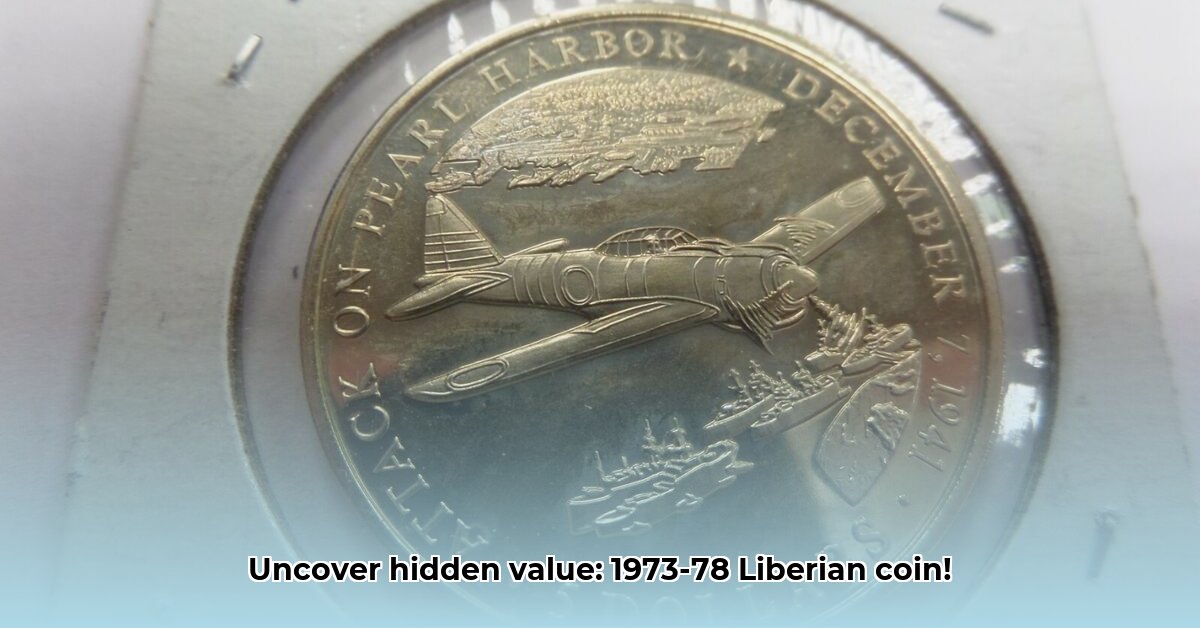
5 Dollar Liberia Coin: 1973-1978: A Collector's Guide
The Liberian 5 dollar silver coin, minted between 1973 and 1978, presents a fascinating challenge for collectors. Its beauty, historical significance, and the inherent difficulties in determining its precise value make it a compelling subject. This guide will equip you with the knowledge and steps to navigate this intriguing numismatic puzzle. For more on coin values, see this helpful resource on 1997 half dollar values.
Decoding the Details: What Makes This Coin Special?
These aren't just ordinary silver dollars. Minted primarily at the Royal Mint in Llantrisant, Wales, these coins boast .900 fine silver (90% pure silver), giving them inherent value tied to the fluctuating silver market. But beyond the precious metal lies a captivating design: Liberia's national coat of arms and a detailed map of the country make these coins visually striking. Their substantial weight (34.1 grams) and diameter (42 mm) contribute to their impressive presence. However, the exact mintage numbers remain elusive, adding to the allure and valuation challenges. Reports suggest potential contributions from the U.S. Mint (San Francisco) and the Franklin Mint, further complicating the mintage picture.
| Specification | Details |
|---|---|
| Metal | .900 Fine Silver (90% pure silver) |
| Weight | 34.1 grams |
| Diameter | 42 mm |
| Primary Mint | Royal Mint, Llantrisant, Wales |
| Other Possible Mints | US Mint (San Francisco), Franklin Mint |
| Years of Production | 1973-1978 |
Isn't it intriguing how a seemingly simple coin holds so much mystery regarding its precise origin? This uncertainty directly impacts the coin's value.
The Value Puzzle: Why is it So Hard to Price This Coin?
Determining the value of a Liberian 5 dollar silver coin isn't straightforward. Several factors contribute to this complexity:
Elusive Mintage Figures: Precise mintage numbers remain unknown, making it difficult to determine rarity, a key factor in a coin's value. This lack of data significantly impacts pricing accuracy. How can you truly know a coin's worth without knowing how many were made?
Limited Public Sales Data: Many transactions occur privately, outside of publicly accessible databases, limiting the availability of reliable sales data for comparative analysis. This lack of transparency makes establishing market value challenging.
Condition is Paramount: Like any collectible, the coin's condition—its state of preservation—heavily influences its price. A pristine, uncirculated specimen will command a much higher price than a circulated or damaged one. This brings us to the crucial aspect of grading.
The absence of readily available, comprehensive data presents a significant hurdle in accurately assessing value. It underscores the importance of understanding the factors beyond the coin's inherent silver content.
How to Figure Out the Value: A Step-by-Step Guide
Determining the value requires careful evaluation and research. Here's a systematic approach:
Meticulous Examination: Thoroughly inspect your coin for wear and tear, scratches, dents, or any alterations. Document your findings with clear photographs. Accurate documentation is crucial for evaluation.
Expert Consultation: Seek advice from experienced numismatists or reputable coin dealers. Their expertise in assessing condition and market value is invaluable. This professional perspective adds significant weight to the valuation.
Professional Grading (Optional): For a precise valuation, especially for high-grade coins, professional grading services from organizations like PCGS or NGC provide an objective assessment based on established industry standards. Such certifications add credibility and transparency to valuation. These services, while adding costs, provide significant added value for sale and investment purposes.
Comprehensive Research: Study auction records and sales data from reputable online platforms and established coin dealers. Look for comparable coins, considering condition and mintage year. Your research should be exhaustive and cross-referenced.
Realistic Expectations: The collectible coin market is volatile. Values fluctuate, and there's inherent unpredictability. Treat your assessment as an informed estimate, not a guaranteed outcome.
Remember, a successful valuation depends on a combination of meticulous observation, expert advice, and diligent research.
Understanding the Investment Risks
Investing in Liberian 5 dollar coins presents risks inherent in the collectible coin market:
| Risk Factor | Likelihood | Impact | Mitigation |
|---|---|---|---|
| Market Volatility | High | High | Diversify your investments; take a long-term perspective; conduct thorough research. |
| Scarcity of Information | High | Medium | Utilize multiple sources; obtain multiple expert opinions; perform extensive research. |
| Counterfeit Coins | Medium | High | Purchase only from trusted dealers; obtain professional authentication. |
| Determining Precise Value | High | Medium | Recognize inherent uncertainty; track sales data meticulously; closely study market trends. |
The investment potential is tied to several factors, but understanding these risks is as important as understanding the potential returns. Careful research and a realistic perspective are crucial.
Key Takeaways:
- The valuation of 1973-1978 Liberian 5 dollar silver coins is complex due to market volatility and limited reliable pricing data.
- Accurate valuation requires considering condition, rarity, and provenance beyond just silver content.
- Expert consultation is highly recommended for precise valuation, particularly for higher-grade coins.
- Investing in these coins carries inherent risk. Proceed with caution and thorough research.
By following these steps and acknowledging the inherent challenges, you can gain a clearer understanding of the value of your Liberian 5 dollar silver coin. Remember, the journey of discovery is often as rewarding as the final assessment.